

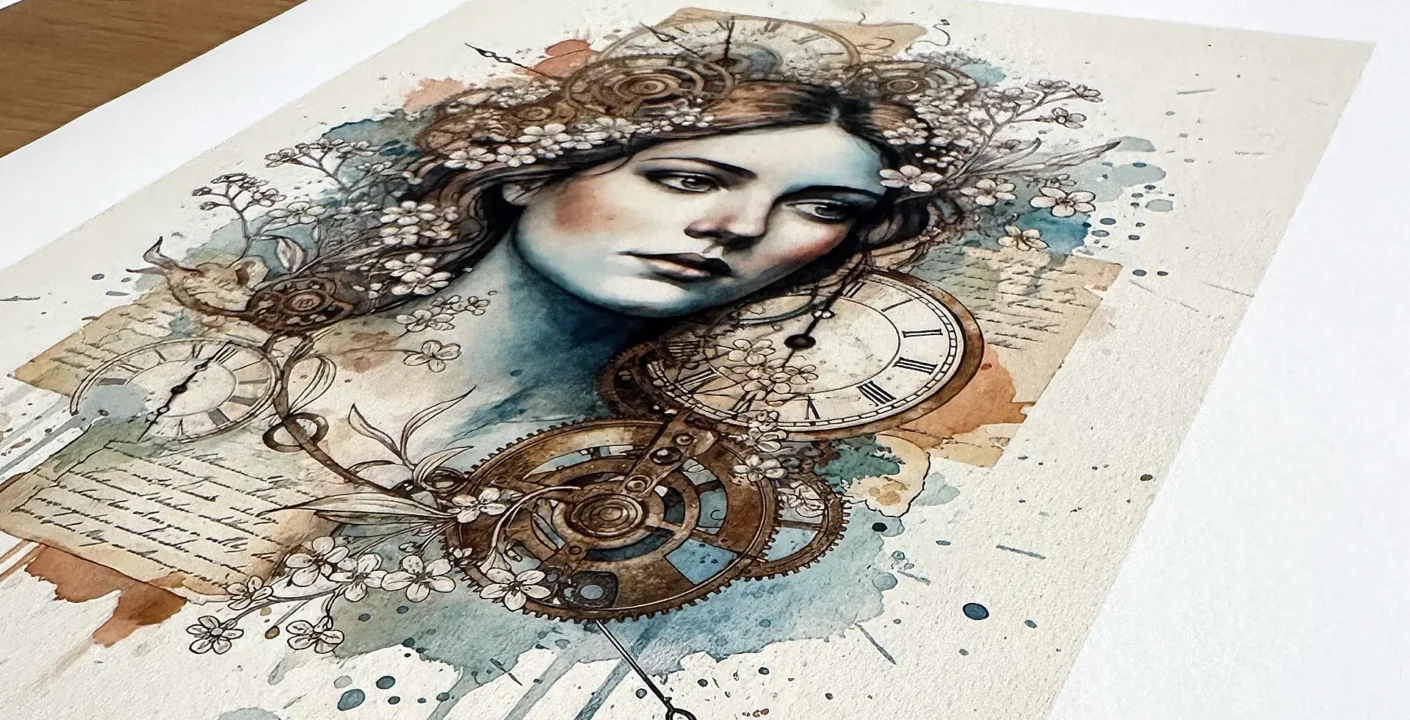
There are materials that don’t represent — they embody. Chinese ink doesn’t imitate reality: it condenses it, distills it, strips it to the essential. When a figure emerges from the white of the paper with a single continuous line, you’re not looking at a drawing. You’re looking at a decision.
Metamorphōsis was born from that conviction.
The starting point: the figure as formal territory
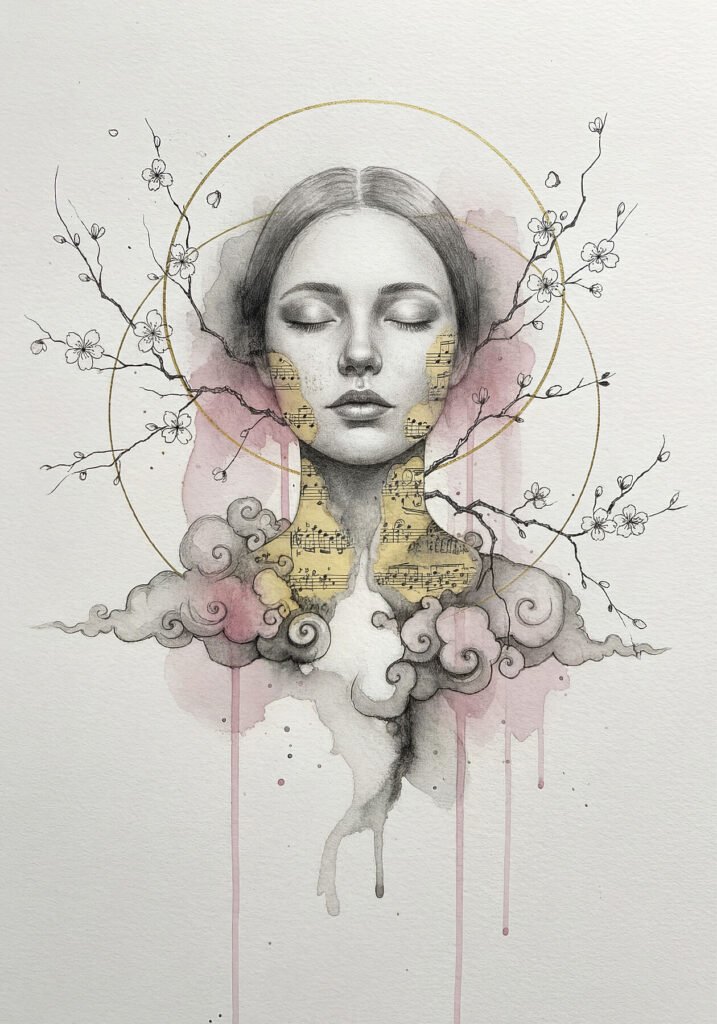
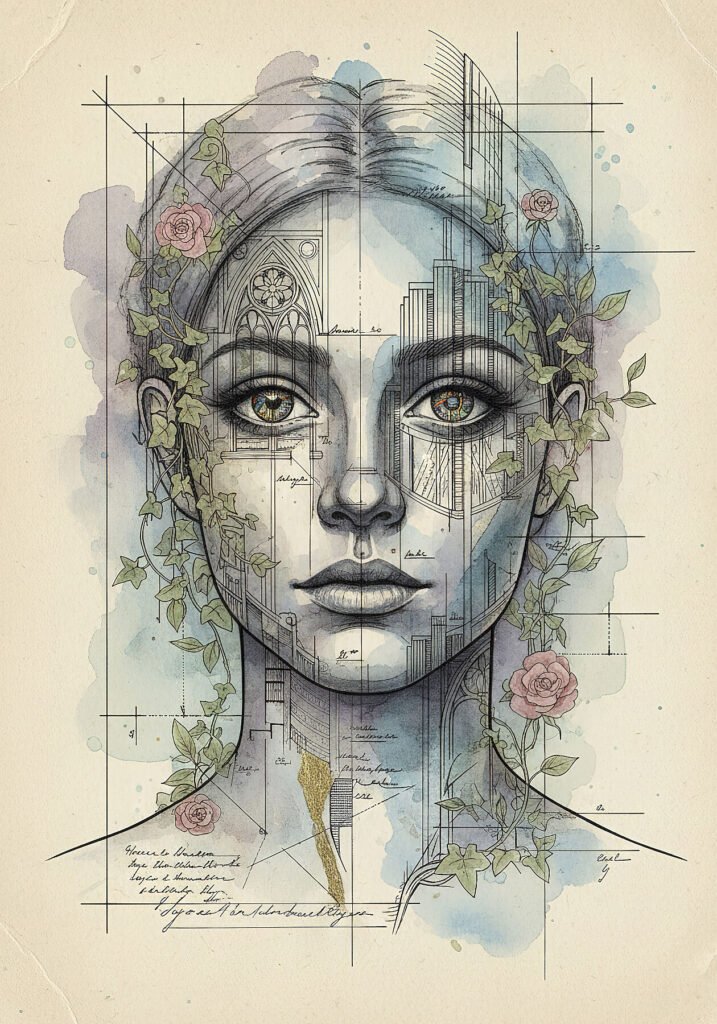
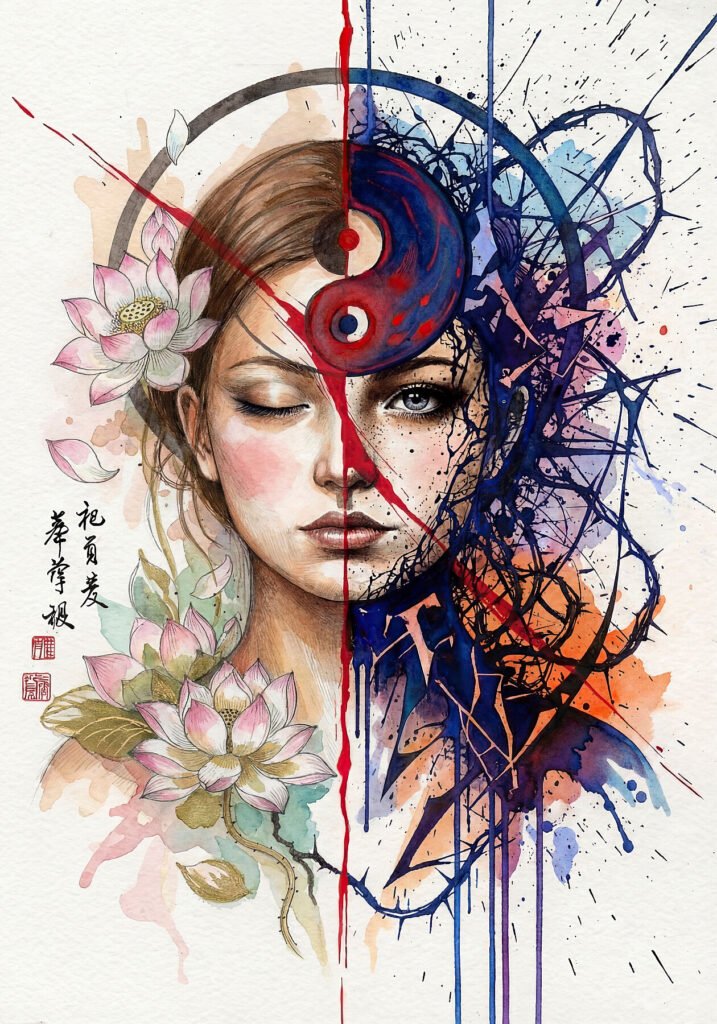
The female figure has been an object of representation for centuries. In Metamorphōsis, it becomes a subject of formal investigation. Each work in the series begins with a question that has no single answer: what remains of a body when everything incidental is removed?
What remains is the gesture. The posture. The tension between form and the space that surrounds it.
Chinese ink imposes that discipline by nature. It admits no revision. Every mark is permanent, and that permanence demands an economy of means that in conventional painting is optional. Here, it is structural.
Why ink. Why now.
The ink tradition of East Asia — Japanese sumi-e, Chinese shui mo — built over centuries a visual philosophy that the West was slow to understand: the void is not absence, it is an active part of the composition. The white space is not unpainted paper; it is silence with shape.
Metamorphōsis engages with that heritage without imitating it. These works are not exercises in Eastern style. They are contemporary artworks that have internalized that lesson and apply it through a distinctly European sensibility: bodies with real weight, gestures with emotional ambiguity, tension between the classical and the unresolved.
The result is a visual language that feels ancient and, at the same time, impossible to date.
Watercolor as threshold
In several works in the series, ink coexists with watercolor. Not as ornament: as an alteration of state. The color washes — warm grays, oxidized siennas, desaturated blues — function as emotional registers layered over the structure of the line.
The figure endures. The color transforms it without dissolving it.
This coexistence between the definitive mark of ink and the unpredictable fluidity of watercolor is what gives Metamorphōsis its internal tension. The works are not resolved. They are in process — and that process is the subject.
The collection: nine works, nine states
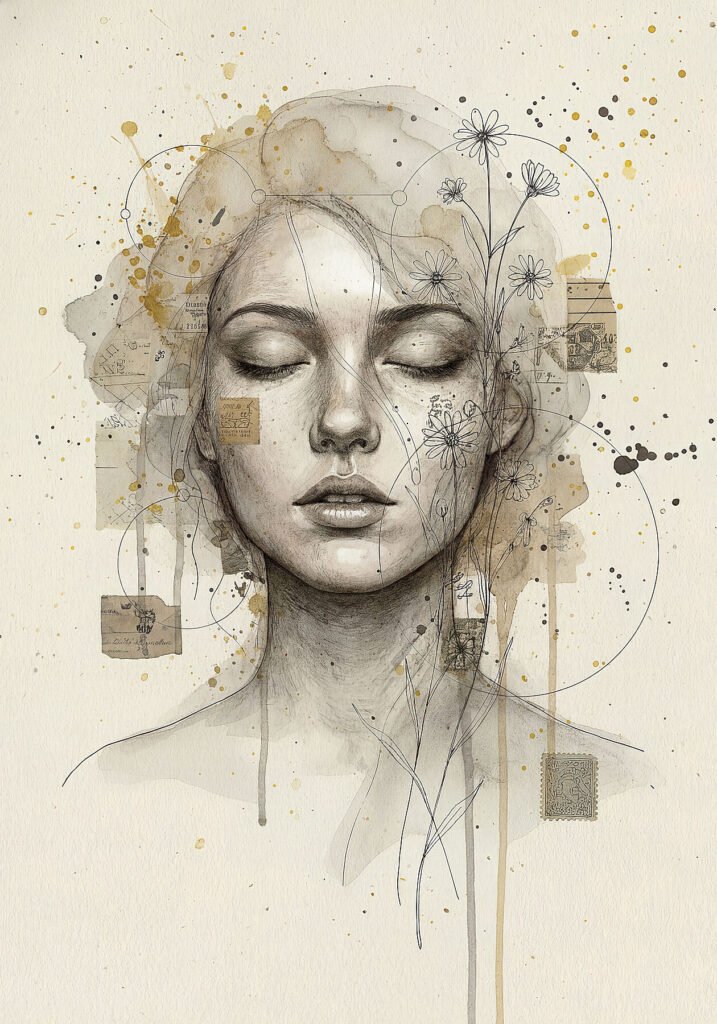
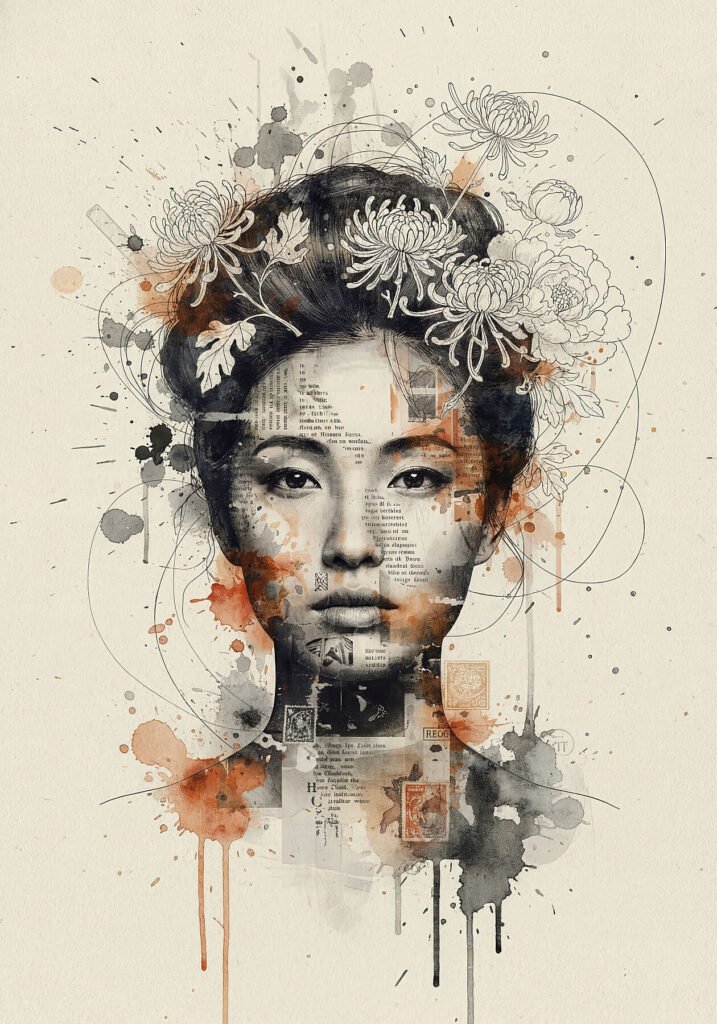
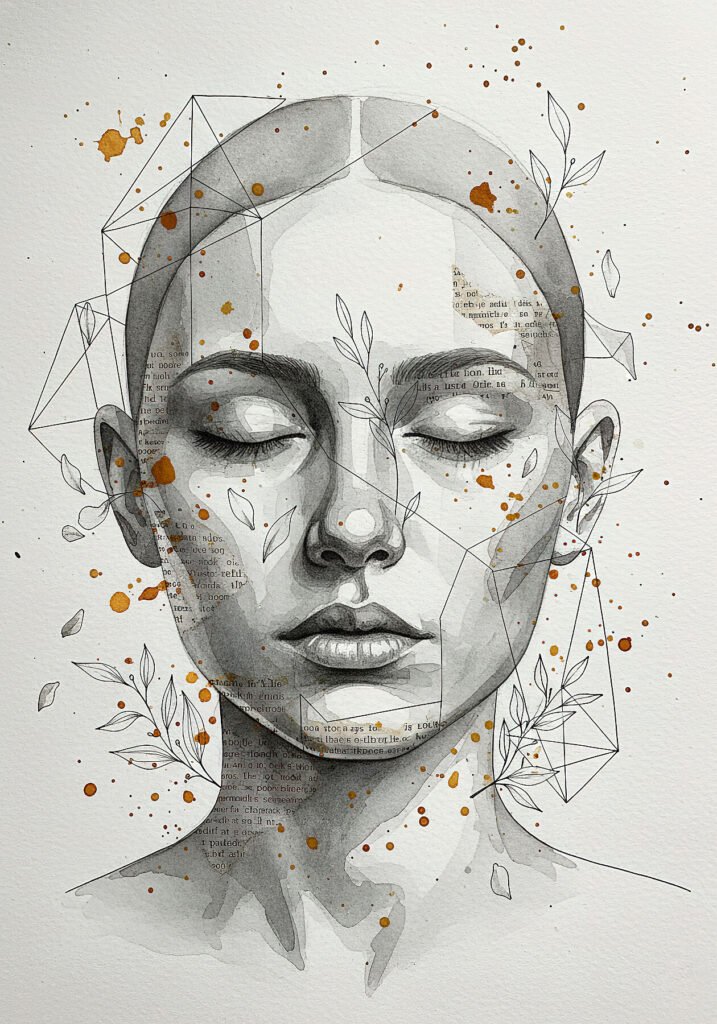
Metamorphōsis comprises nine works. Each explores a posture, an emotion, a moment of transition. There is no linear narrative between them, but there is a coherence of character: all belong to the same visual universe, the same vocabulary of line and void.
Nine copies per work. The edition closes when complete. No reprints.
The number is not arbitrary. In the numerological tradition of many cultures, nine is the last number before the cycle resets — the boundary of completion. At Umbra Studio, it is also a production limit. What exists, exists in that quantity forever. What sells out, does not return.



The paper as third element
An ink drawing printed on ordinary paper is an illustration. The same work on Hahnemühle Photo Rag 308 g/m² is a collectible fine art print.
This is not hyperbole. It is chemistry and physics: pigments penetrate the pure cotton fibers differently than they do in cellulose. The texture of the Photo Rag — slightly textured, matte, with presence — adds a tactile dimension to the ink line that no screen can replicate. The mark has perceived weight. The white of the ground has temperature.
Every print in the Metamorphōsis collection includes the Hahnemühle Certificate of Authenticity, handwritten numbering, and signature. Not as formality: as part of the object.
Who Metamorphōsis is for
For the collector who has seen many paintings and can distinguish between a work that decorates and a work that inhabits.
For the interior designer looking for pieces with their own voice — pieces that don’t disappear into a space but define it.
For those who understand that an edition of nine is not a commercial strategy. It is a promise of rarity.
→ View the complete Metamorphōsis collection Check availability by size. Works are delivered with certificate, numbered and signed.
Interested in understanding why the paper makes the difference between a print and a collectible work? Read: Hahnemühle Photo Rag 308: the paper that turns an image into an object