
The creative process
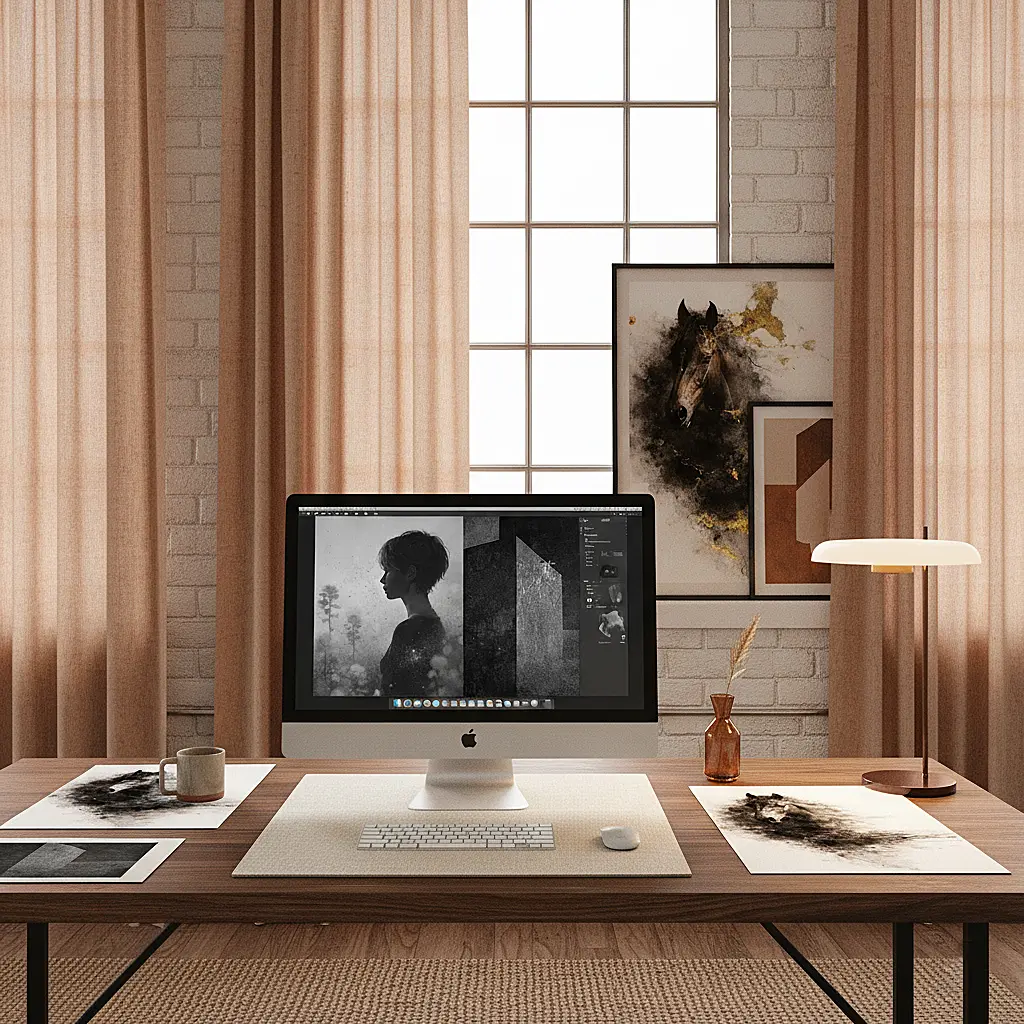
The instrument and the author
There is a question that deserves a direct answer: who makes these works?
A process does. A process that combines human intention with computational image generation tools — in the same way that photography combines human vision with chemistry and optics, or that printmaking combines concept with acid and metal.
The instrument does not determine the value of the work. What determines it is what the artist chooses to do with it, what they decide to show and what they discard, the criterion that guides each decision.
At Umbra Studio, the AI is the instrument. The curation is the work.
The first concept
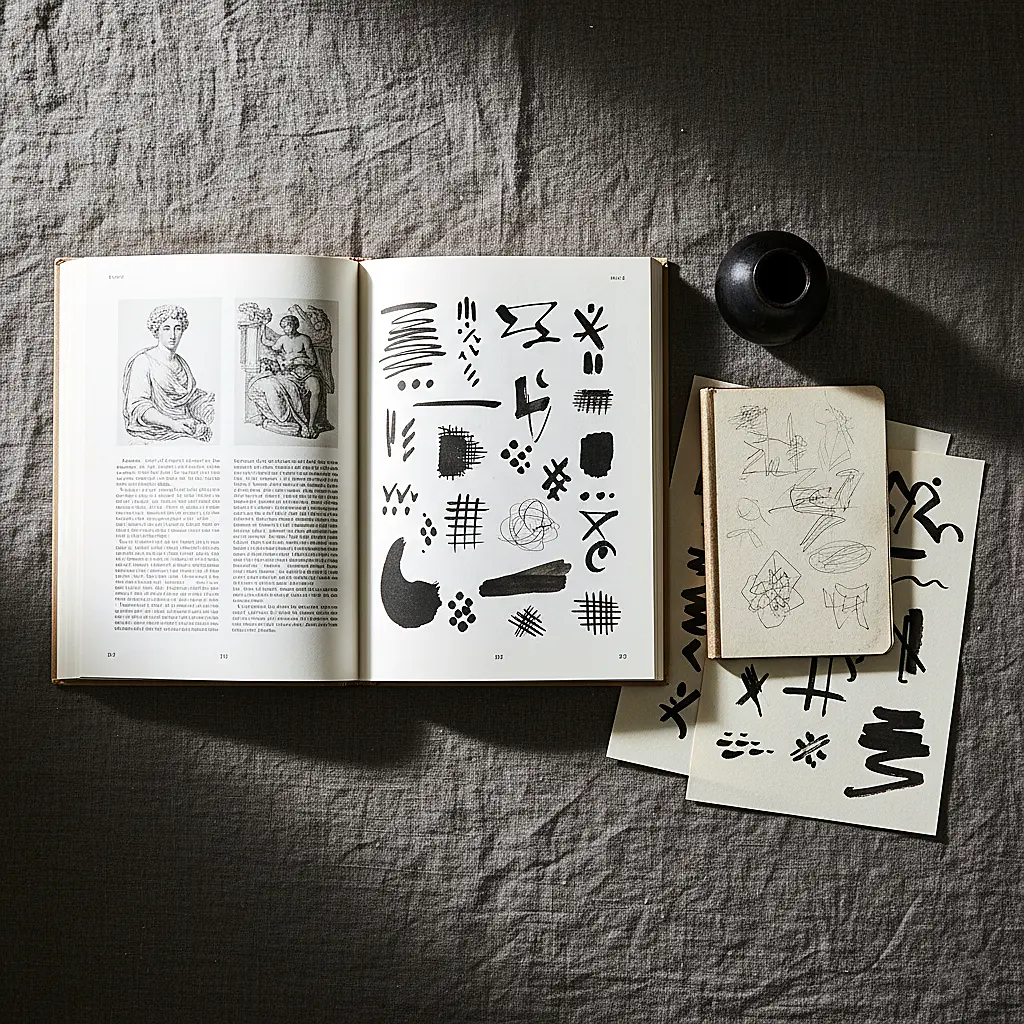
No work begins in front of a screen. It begins with a question.
What tension exists between what grows slowly and what endures? What do the morphology of insects and the morphology of empires share? What remains when the water recedes?
Each collection is born from research that can last weeks: references in art history, mythology, biology, architecture, philosophy. Currents ranging from Abstract Expressionism to Song dynasty painting, from wabi-sabi to late 19th century European Symbolism.
Only when the concept has enough weight to sustain a coherent series of works does the generation phase begin.
Generation and Discard
What the computational process produces in raw form is not a work. It is material.
From each working session emerge dozens, sometimes hundreds of variants. The selection criterion is simple to state and demanding to apply: does this image withstand five minutes of sustained attention? Does it continue to say something when the viewing distance changes? Does it have the internal tension that makes it interesting over time?
Most do not. They are discarded.
What remains enters the next phase. What is discarded does not return.
Curatorship
Selected pieces are not published immediately. They undergo an observation period.
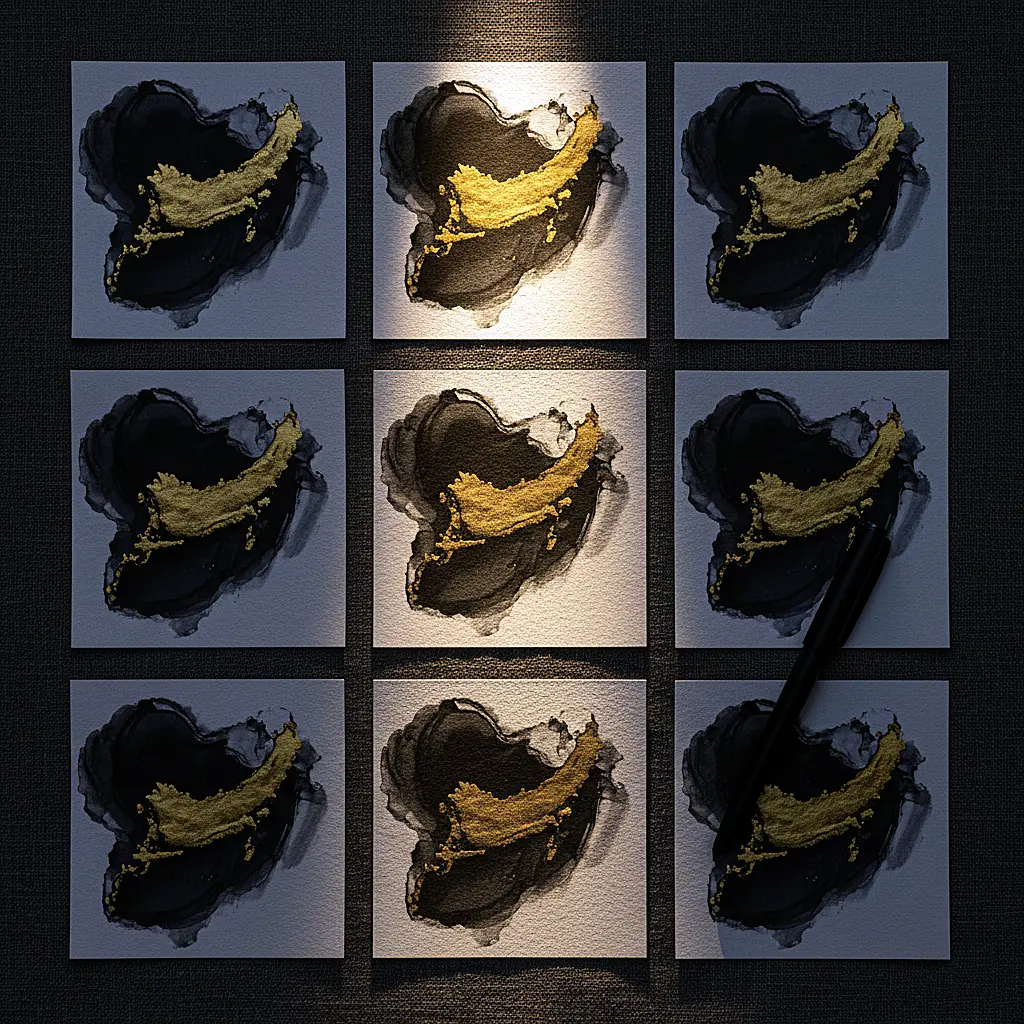
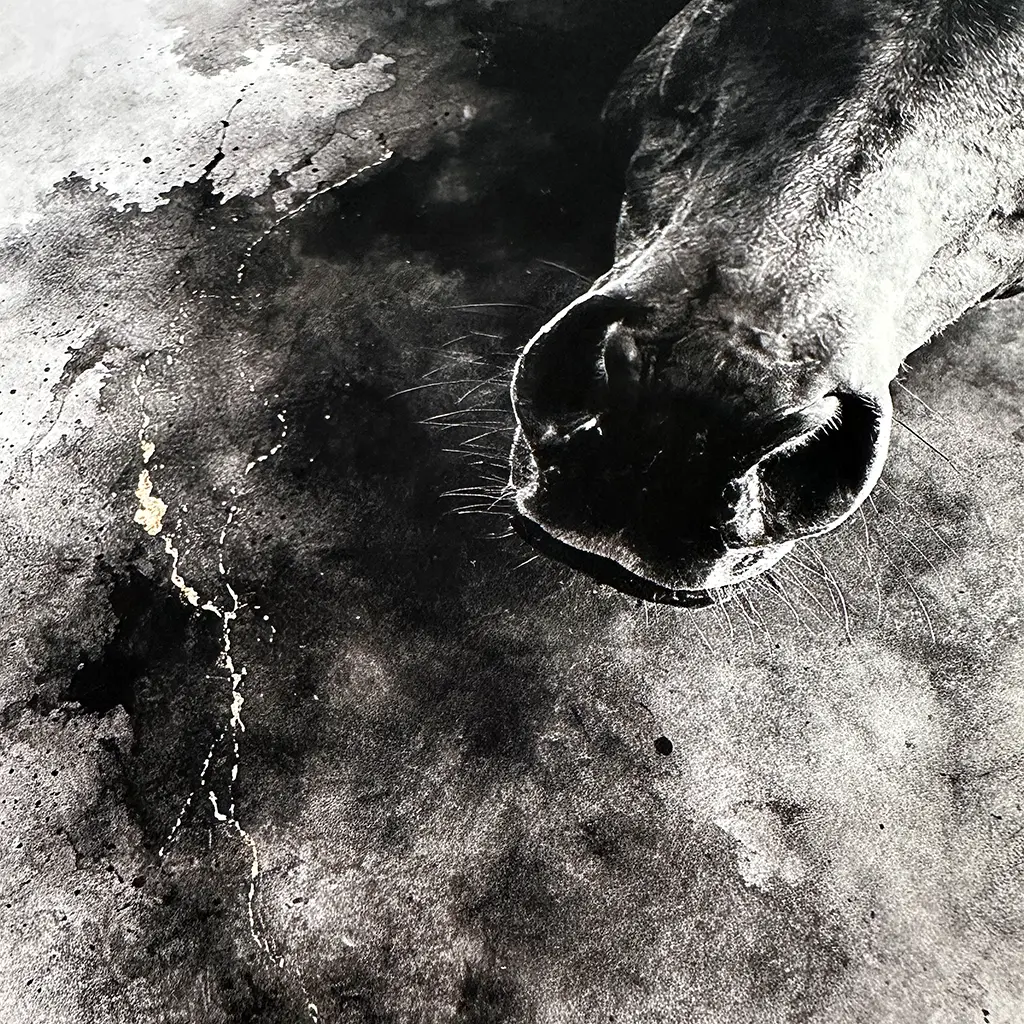
They are printed as working proofs. Observed under different light conditions. Evaluated in relation to the other works in the same collection — if a piece weakens the coherence of the whole, it is removed even if it works individually.
The final question that determines whether a work enters an Umbra Studio collection is not is it technically correct? It is does it deserve the paper?
Technical preparation
When a work passes curation, a precise technical process begins.
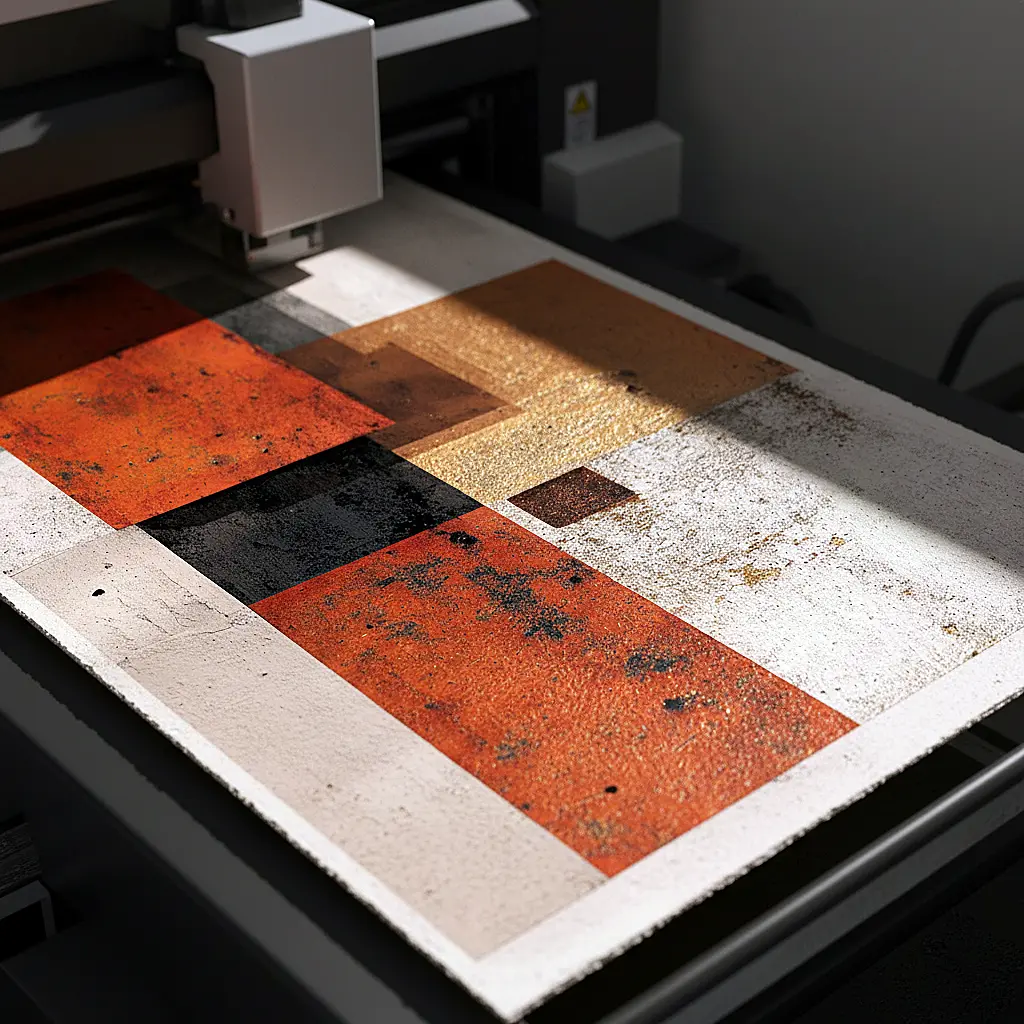
The file is prepared for printing at the maximum resolution the format admits. Colour profile adjustments are made specifically for Hahnemühle Photo Rag 308 g/m² paper, a pure cotton substrate with absorption characteristics distinct from any other support. Margins are calibrated to allow framing without compromising the composition.
Colour proofs are made on the same paper as the final edition. If there is discrepancy between intention and result, it is corrected in the file. Not in the print.
The physical object
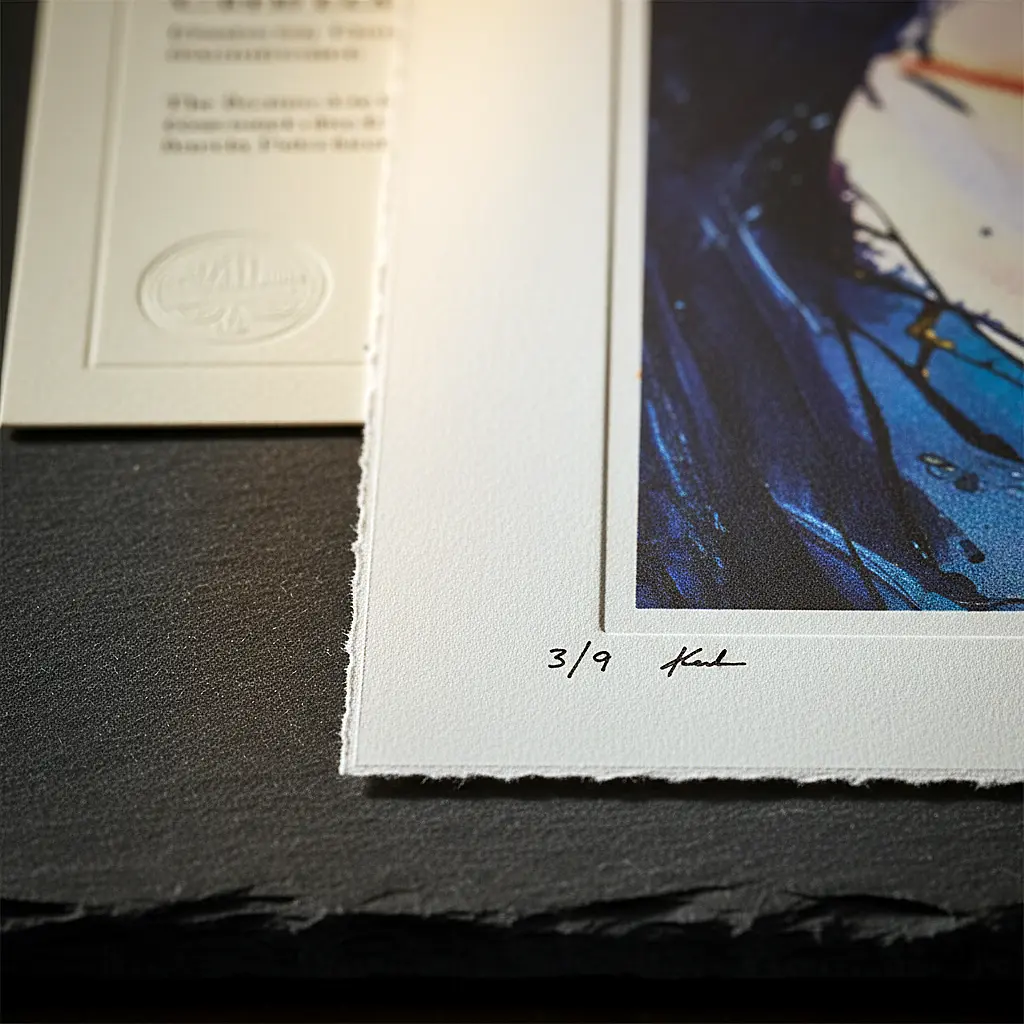
Giclée printing is the only artistic reproduction process that faithfully replicates the tonal intention of the original file. Archival pigment inks, light-resistant for over 100 years under museum conditions, deposited on pure cotton with a precision of 2400 dots per inch.
The result is not a copy. It is the original on paper.
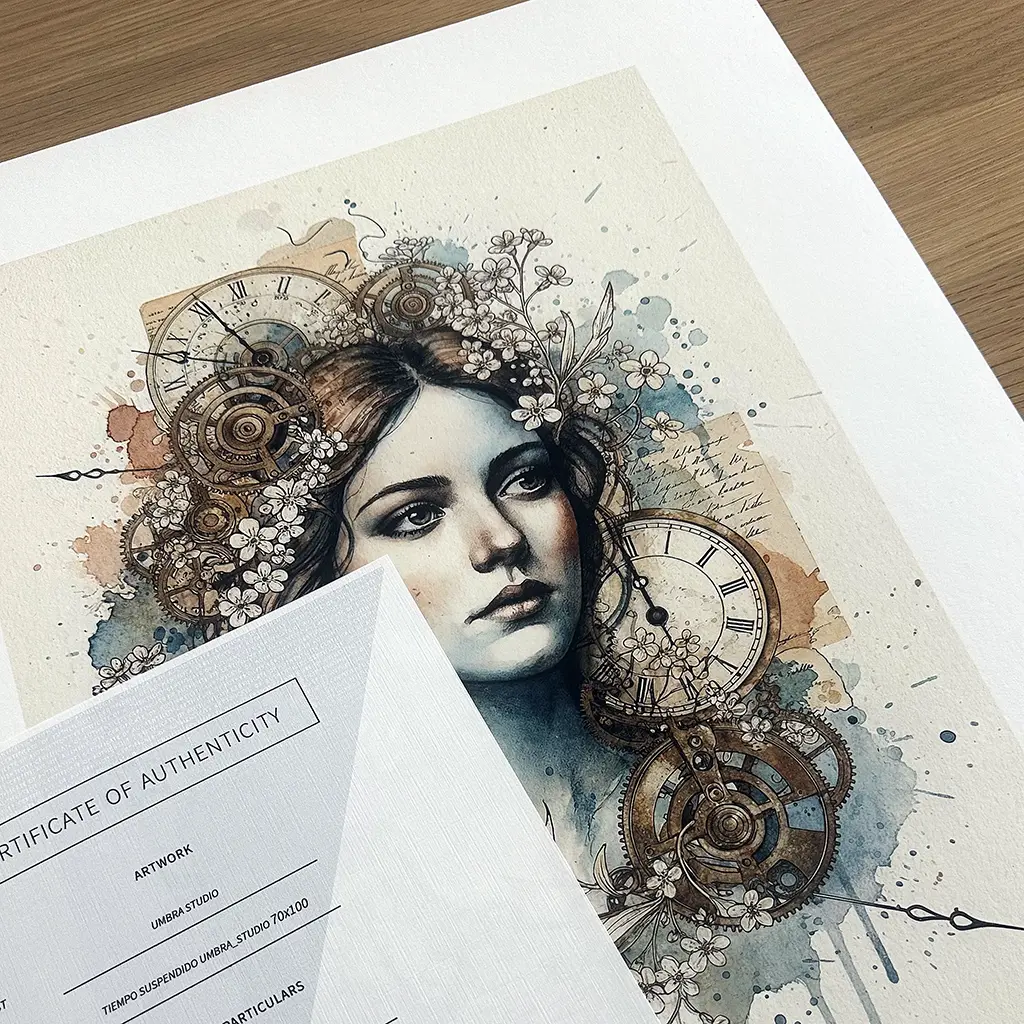
Each print arrives with the Hahnemühle FineArt Certificate of Authenticity, generated directly by the paper manufacturer. A document that certifies the substrate, the process, and the edition. Not an internal declaration: an independent third-party document.
The edition number and signature are embedded in the production file and form an indissoluble part of the printed image. They are not subsequent additions: they are a constitutive element of the work as it reaches the collector.
The 9th edition
Nine is not a figure chosen for commercial reasons. It is a decision about the nature of the work.
An edition of nine creates a relationship between prints that larger editions cannot sustain. Nine people in the world share that exact work, on that exact paper, at that exact number. That is not scarcity marketing: it is an ontological condition of the piece.
When the ninth print leaves the laboratory, the digital plate is closed. No reprints. No special editions. No exceptions.
The permanence of the work depends, in part, on the permanence of that limit.
Current collections are available until each work’s nine prints are claimed.