

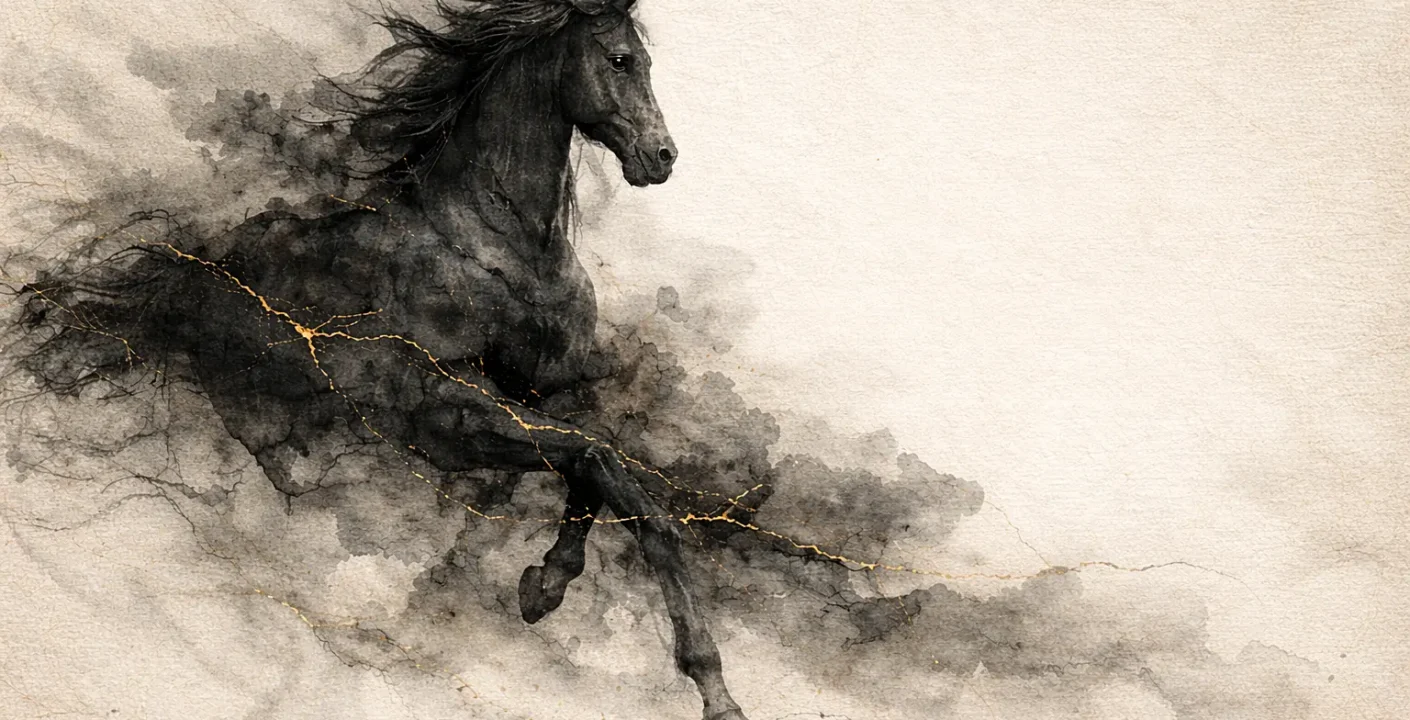
The horse as an artistic symbol
From the earliest cave paintings to contemporary galleries, the horse has been one of the most enduring and powerful themes in art history. Its anatomy, movement, and presence have inspired generations of artists and viewers alike. In contemporary art, this figure has been transformed: no longer confined to traditional equestrian scenes, it has become a visual symbol of strength, freedom, nobility, and emotional abstraction.
A Brief History of Equestrian Art
Horse art has ancient roots. From scenes of horses in cave paintings to classical Greece, the horse has been represented in sculptures, paintings, and reliefs that showcase both its anatomy and its social significance.
In ancient times, the horse symbolized status, power, and mobility. In Renaissance and Baroque art, artists depicted it with hyperrealism to express grandeur and dominance. Over time, the horse evolved in artistic narratives: from the conquering rider to the animal as an autonomous entity. This evolution laid the groundwork for its reinterpretation in the contemporary context.
What is Contemporary Equestrian Art?
Contemporary equestrian art is not simply the literal representation of a horse. It is an expressive field where artists explore themes such as identity, emotion, movement, and abstraction through the equine figure. Far removed from classical academicism, this art can include:
- Stylized portraits in ink, oil, or mixed media.
- Emotional or abstract interpretations of the horse without narrative context.
- Sculptures that use unusual materials to reimagine the equine form.
This conceptual shift redefines the relationship between the viewer and the artwork: we no longer simply observe a horse, but an idea, a gesture, a presence. This trend has gained prominence in specialized galleries, auctions, and private collections worldwide.
Current Trends in Equestrian Art
From the Real to the Conceptual
While traditional equestrian art depicted movement and anatomy with precision, contemporary art reinterprets the horse as a symbolic, emotional, or abstract icon. Works that use dissolved forms, gestural ink, or negative space exemplify this evolution.
Contemporary artists—both painters and sculptors—are eliminating riders and conventional scenes, focusing exclusively on the animal’s energy.
Diversity of Techniques
The technique is no longer limited to figurative art. Abstract painting, mixed media, minimalist ink wash, artistic photography, modern sculptures, and multimedia works are shaping the scene. The result is a plurality of languages that demonstrates how the horse adapts to diverse contemporary styles.
Expressiveness and Movement
The representation of movement remains central, but not in a narrative way. The horse is presented as pure energy: pictorial gestures, lines that suggest a gallop or expanding mane, negative space that generates visual dynamism—without an explicit context.
Relevant Artists and Galleries
In the contemporary art world, artists working with equine themes offer unique perspectives:
- Donna B (Donna Bernstein) revitalizes the emotion and grace of the horse with a contemporary equine aesthetic.
- Lara Kaller explores movement and emotional presence inspired by her personal equestrian experience.
- Galleries such as The Equine Art Gallery and specialized platforms offer a modern curation of equestrian pieces for discerning collectors.
Additionally, platforms like Clarendon Fine Art bring together works by artists who celebrate the strength, grace, and unique aesthetic of the horse in contemporary contexts.
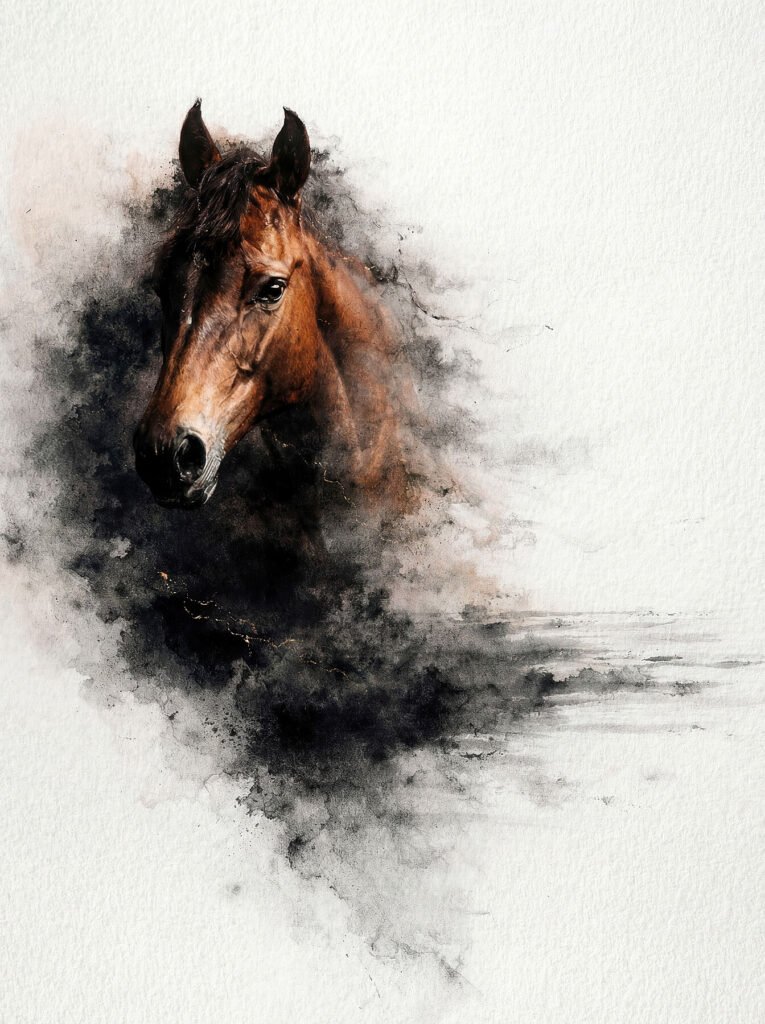
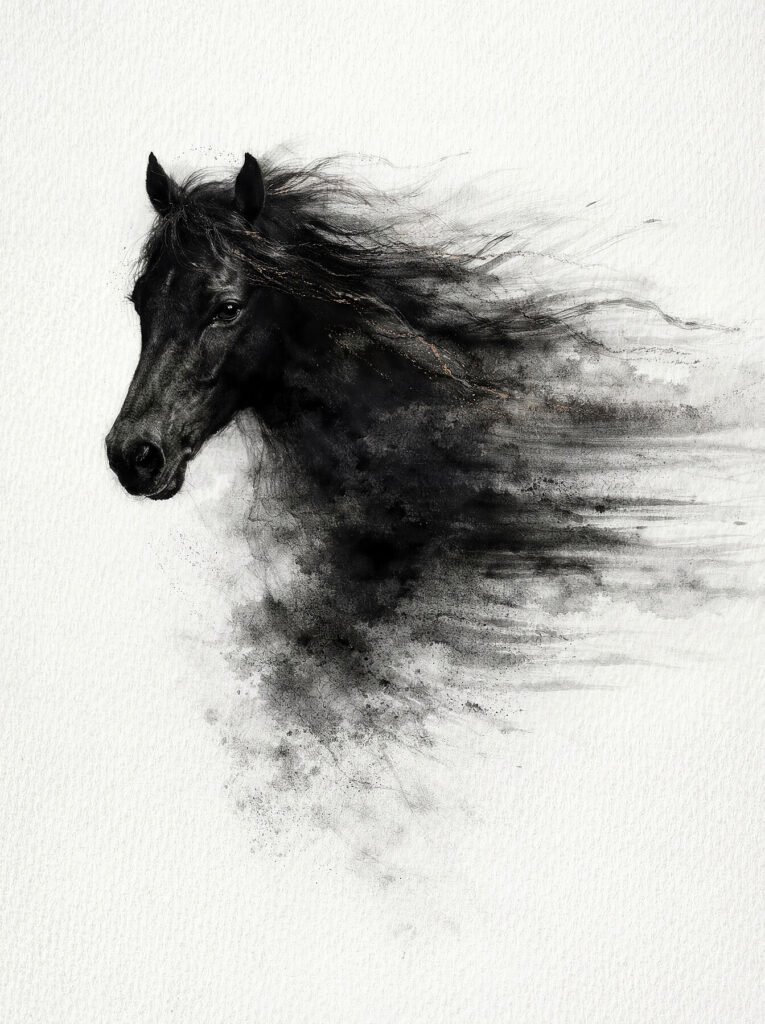
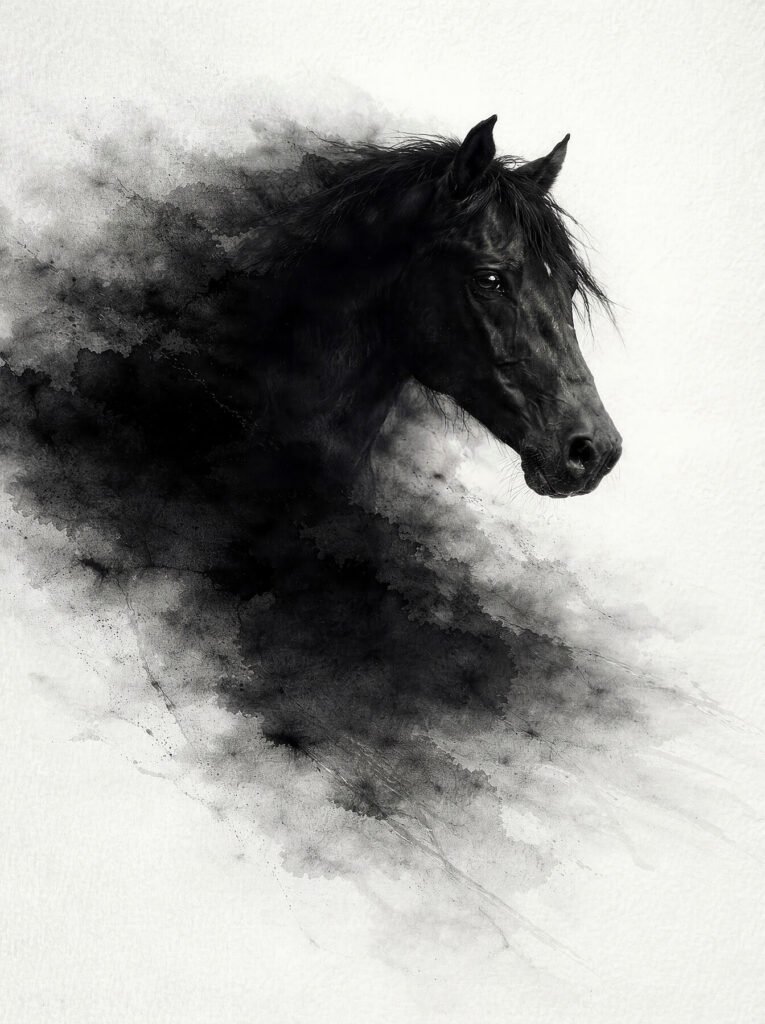
An example of contemporary conceptual equestrian art
NOBILIS — Blood and Wind explores the primal nobility of the horse through gestural Chinese ink and structural metallic pigments.
Why does contemporary equestrian art matter?
A symbol of human and animal connection
Horses have been linked to humankind throughout history. This not only influences the poetic function of equestrian art but also its cultural value. Contemporary artists depict not only the animal’s anatomy but also the emotional connection, the shared energy, and the implicit freedom between horses and humans.
How to integrate contemporary equestrian art into your collection
Define a curatorial style
Before acquiring artworks, decide whether you prefer abstract, minimalist, expressive, or hyperrealistic pieces. This will help you build a coherent visual language in your collection.
Meet the artist
Research the artist’s background: technique, personal equestrian experience, awards, exhibitions, and presence at art fairs or galleries. An artist with a strong artistic vision offers greater representational value.
Print quality and support
If you choose printed pieces, check for:
- Giclée printing on fine art paper
- Certificates of authenticity
- Numbered and controlled editions
These factors increase the artwork’s longevity and collectability.
Location and light
Exhibition spaces should optimize the dialogue between the artwork and the viewer. Avoid direct light that damages pigments and seek environments that enhance contrast and visual interpretation.
Contemporary equestrian art represents a significant evolution within modern art. It is no longer merely a representation of the animal; it is a poetic, symbolic, and conceptual exploration. From reinterpreted traditional techniques to experimental visual languages, the horse remains a muse and central motif.
For collectors, curators, and art lovers, this discipline offers a unique blend of history, emotion, presence, and aesthetic meaning.