
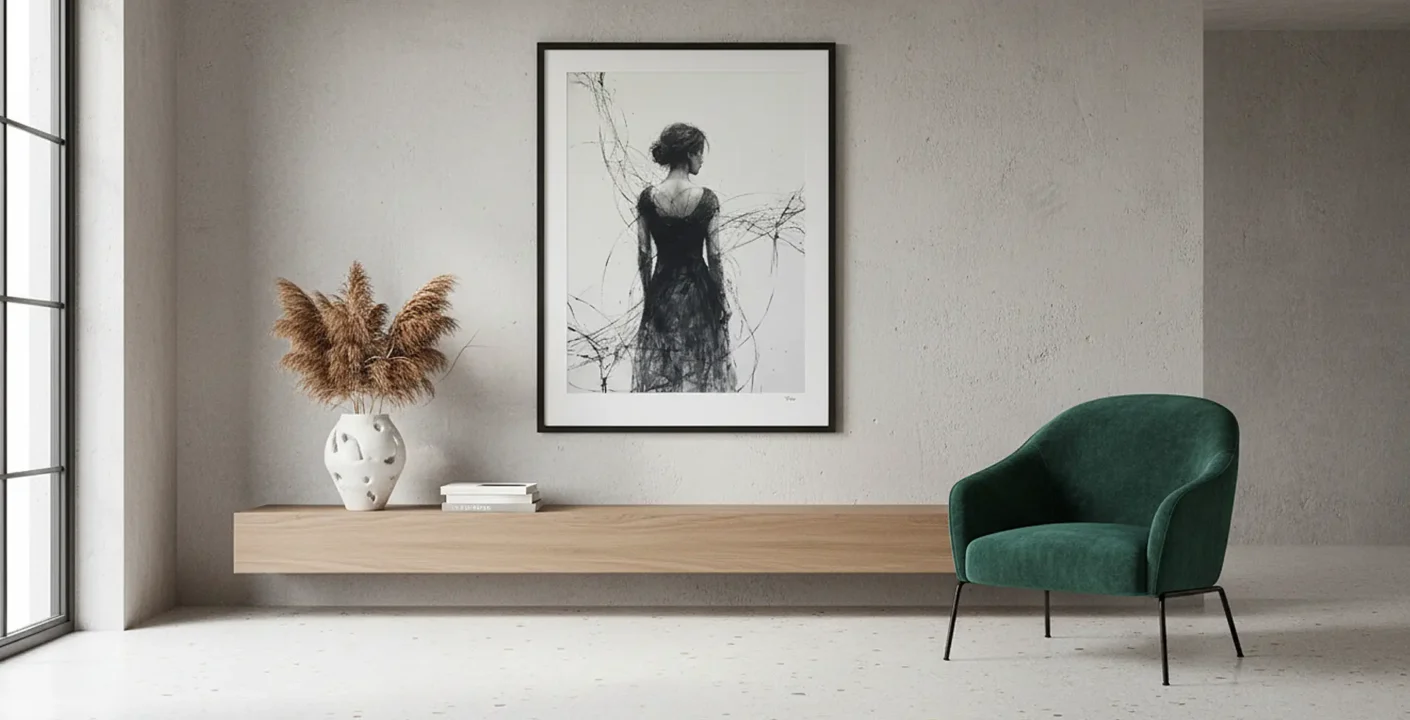
AI-generated art: can it be high-end collectible fine art?
The question is no longer whether AI can create art. The question is what transforms that art into something worthy of a collection.
In February 2025, Christie’s held its first auction composed entirely of AI-generated art. The sale — titled Augmented Intelligence — achieved a combined total of $728,784, far exceeding its low estimate of $600,000. Months earlier, at Sotheby’s, Portrait of Alan Turing, created by AI-powered robot Ai-Da, sold for $1.08 million, becoming the most expensive AI artwork ever sold at auction.
These are not isolated anecdotes. They are symptoms of a profound reorganisation in how the art world understands authorship, value, and permanence.
And yet the debate has not settled. According to the Artsy AI Survey 2026, only 9% of gallery professionals consider AI-generated art a legitimate new medium, while 25% describe it as a destabilising force for authorship and value.
The tension is real. And it is precisely what makes this an extraordinary moment to collect.
The wrong question
For decades, the art world has fought battles over the legitimacy of every new medium: photography versus painting, printmaking versus oil, digital art versus the physical object. In each case, the opening question was the same: is this real art?
Invariably, history proved the question was poorly framed.
What determines whether a work belongs in a collection is not the instrument used to create it. It is the depth of vision it carries, the singularity of its presence, and — in the case of works on paper — the irreversible quality of the physical object that gives it form.
The tool is circumstantial. The work is permanent.
What the market has already decided
The cultural debate over the legitimacy of AI-generated art coexists with a very different financial reality. The global AI in art market was valued at approximately $3.2 billion in 2024 and is projected to reach $40.4 billion by 2033, at a compound annual growth rate of 28.9%.
More than a third of fine art auctions now include AI-created works. Institutions such as MoMA have commissioned installations by Refik Anadol. Gagosian and White Cube — two of the most influential galleries in the world — represent artists who integrate artificial intelligence into their practice.
The market does not wait for critical consensus. It never has.
At the Christie’s auction, 48% of bidders were Millennials and Gen Z, and 37% of those registered were newcomers to the house. This is not a demographic curiosity. It is a structural signal: a generation of collectors who do not need establishment validation to act on their instincts.
But not all AI-generated art is collectible
This is the fundamental distinction the serious collector must draw.
AI has solved the efficiency problem but created the opposite one: infinite replicability. An AI piece can be regenerated with different parameters. What drives art value is precisely the opposite — uniqueness, scarcity, the impossibility of exact duplication.
In other words: an AI-generated image downloaded in digital format is not a collectible work. It is a file.
What transforms it into a collectible work is the process that makes it into a singular, irreproducible object:
1. Curatorial selection. The difference between the raw output of a generative model and a work of art lies in the same capacity that distinguishes a great photographer from someone who merely presses a shutter: vision. The curator — or artist — determines what deserves to exist as an object. Most AI-generated images do not pass this test.
2. Numbered limited edition. Scarcity is not a marketing device. It is the material condition of value in art. A work available in open, unlimited editions cannot constitute a collecting asset. The limitation is the work.
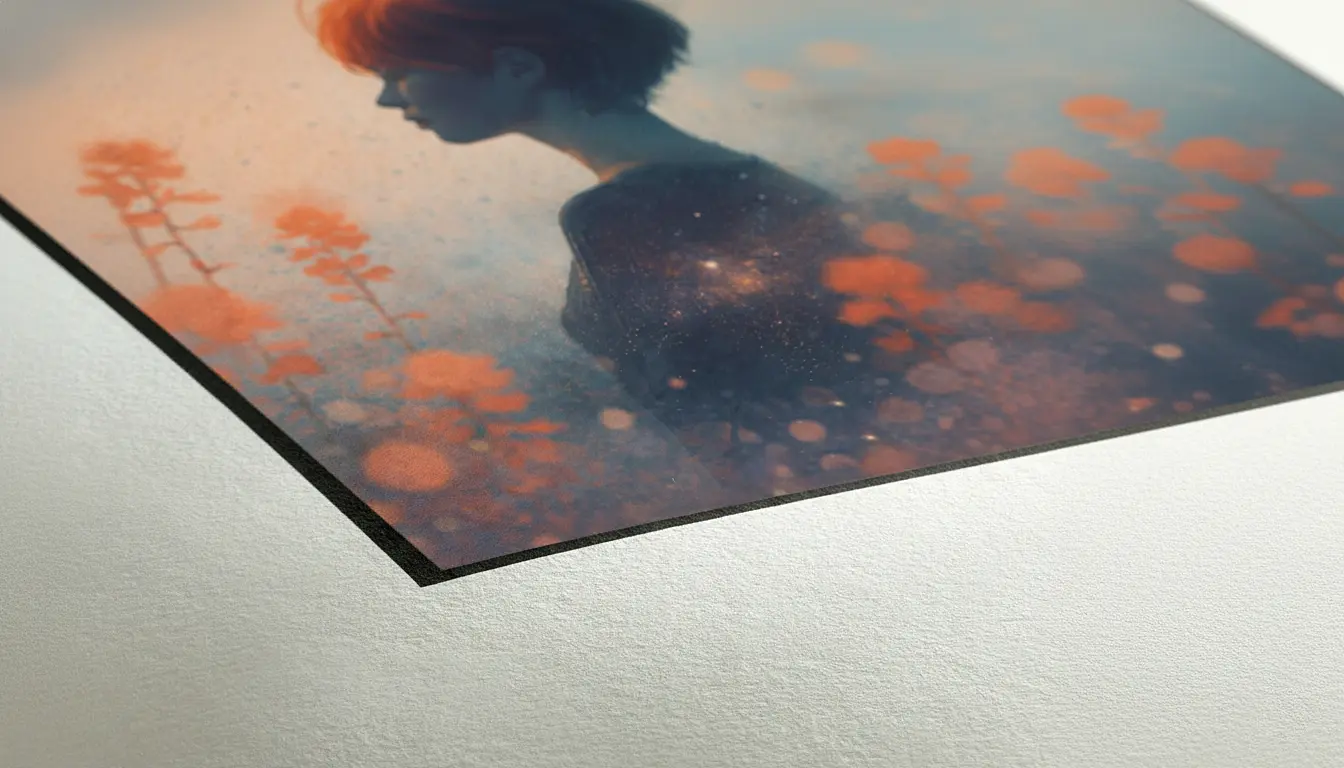
3. Materialisation on museum-quality support. An image printed on 308 g/m² archival cotton paper is a different object — ontologically different — from the same image on a screen. The ink penetrates the fibre. Time acts upon it in a predictable, controlled way. The object acquires history.
The support as argument
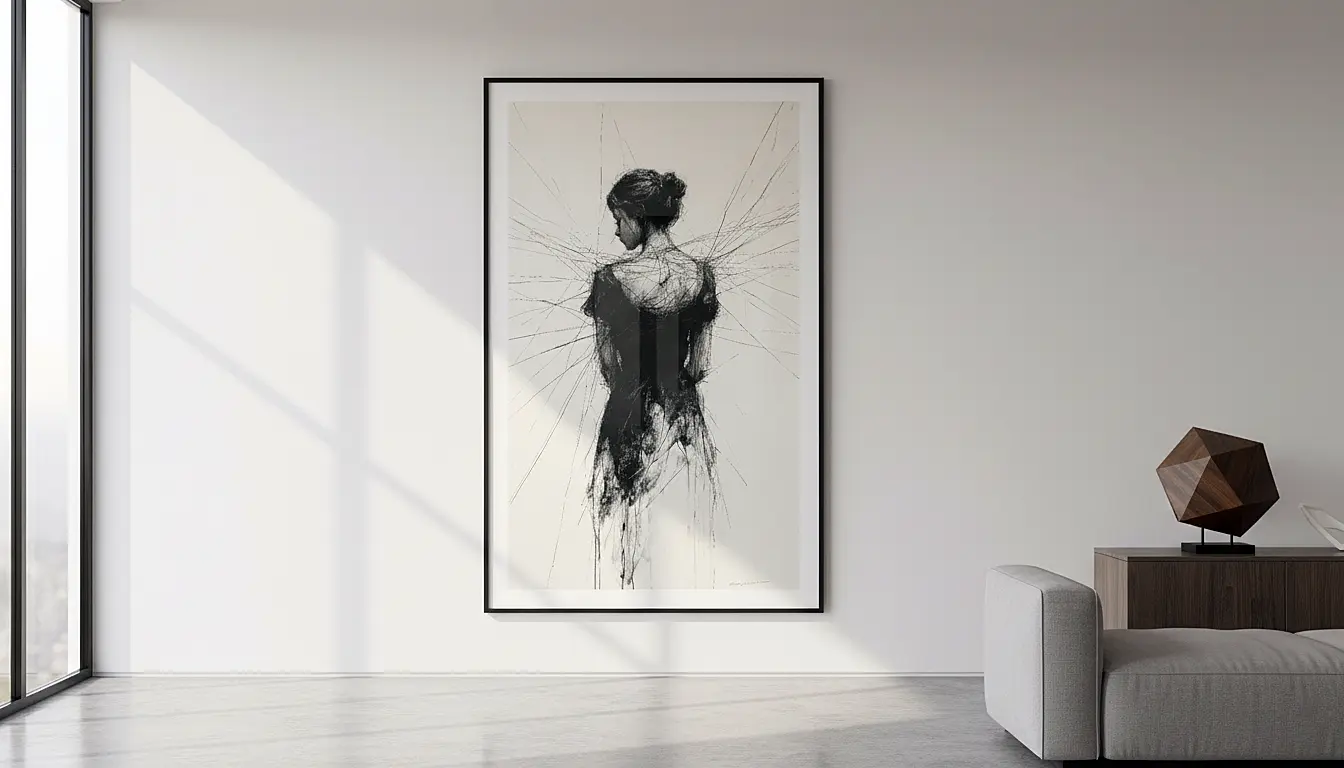
At Umbra Studio, every work is printed on Hahnemühle Photo Rag 308 g/m²: pure cotton paper, acid-free, with a certified archival permanence of over a century. The same surface chosen by the world’s most demanding art printers for museum reproduction.
The choice is not cosmetic. It is a declaration of intent about the kind of object being created: not a consumer product, but an object built for permanence.
Each edition is produced in a maximum of nine numbered copies, accompanied by a FineArt Certificate documenting the work, its edition number, and its technical specifications. Once the final copy is sold, the edition closes permanently.
Nine is the number that defines scarcity without denying the collector the possibility of access. In many traditions, it is also the number of completion.
What the collector is really acquiring
In the new art ecosystem, artists and platforms that establish transparency and ethical best practices will be the ones who earn trust — and the market. TS2
A collector who acquires a work from Umbra Studio is not buying a printed digital file. They are acquiring:
- A singular physical object with a registered edition number
- A position in the early history of a medium that institutional markets have already recognised
- A visual presence with its own character, capable of transforming the space it inhabits
- A work created through deliberate curatorial judgement, not generated randomly or serially
Artificial intelligence is the instrument. The judgement is human. The work is real.
A final thought
The history of collecting is also the history of those who believed before others did.
The first collectors of photography were considered eccentric. The first to acquire prints by contemporary artists, opportunistic. The first to invest in digital art, reckless.
Today, their collections are reference points.
AI-generated art stands at that same threshold: the moment when the institution has already recognised it, but the broader market still hesitates. This is, historically, the best moment to collect.
Not because it is a financial investment — though the market points in that direction. But because the works that enter a space at this moment carry something no price can fully capture: the awareness of having chosen first.
Explore Umbra Studio’s current collections: works in editions of 9, printed on Hahnemühle Photo Rag 308 g/m², with a FineArt Certificate included.